Captive-Bred Banggai Cardinalfish - Pterapogon kauderni
The Captive-Bred Banggai Cardinalfish (Pterapogon kauderni) is a peaceful reef fish known for its bold black striping, elongated finnage, and calm hovering behavior. Native to the Banggai Islands of Indonesia, this species naturally inhabits shallow seagrass beds, sea urchins, and branching corals where it forms small social groups for protection.
Captive-bred Banggai Cardinalfish are highly sought after due to their hardiness, aquarium adaptability, and reduced impact on wild populations. Compared to wild-caught specimens, captive-bred individuals are typically more accustomed to prepared foods and aquarium life, making them an excellent choice for both beginner and experienced reef keepers.
Care Requirements
Care Level: Easy – Hardy and well-suited for established reef aquariums
Minimum Tank Size: 30+ gallons
Aquarium Setup: Peaceful reef or fish-only aquarium with rockwork, shaded areas, and moderate flow
Banggai Cardinalfish prefer calm areas where they can hover comfortably throughout the day. They appreciate rock structures, branching corals, and other sheltered areas that provide a sense of security.
Diet & Nutrition
Captive-Bred Banggai Cardinalfish are carnivores that readily accept a wide variety of prepared aquarium foods.
Diet: Carnivore – Feeds on meaty frozen and prepared foods
Recommended Foods:
- Mysis shrimp
- Brine shrimp
- Finely chopped seafood
- High-quality marine pellets
- Frozen carnivore blends
Captive-bred specimens are usually excellent eaters and adapt quickly to regular feeding schedules. Offering a varied diet helps maintain healthy body weight and finnage.
Lifespan & Growth Rate
Lifespan: 4–6 years
Growth Rate: Slow to Moderate
With stable water quality and proper nutrition, Banggai Cardinalfish remain relatively hardy and can thrive for several years in captivity.
Temperament & Compatibility
Temperament: Peaceful – Calm and slow-moving
Reef Safe? Yes
Banggai Cardinalfish are reef safe and generally coexist well with corals and invertebrates. They are best housed with other peaceful fish that will not outcompete them during feeding.
While peaceful toward most species, adults may become territorial toward other Banggai Cardinalfish unless they are a bonded pair or housed in a sufficiently large aquarium.
Common Challenges & Considerations
Conspecific Aggression:
Keeping multiple adults together in smaller aquariums may lead to territorial disputes or aggression.
Slow Feeding Response:
Their calm nature can cause them to be outcompeted by aggressive tank mates during feeding.
Flow Sensitivity:
Extremely high flow may stress them, as they prefer calmer hovering zones within the aquarium.
Mouthbrooding Behavior:
Males are mouthbrooders and may stop eating temporarily while carrying eggs or fry.
Water Conditions
Temperature: 75–77°F
dKH (Alkalinity): 8–9
pH: 8.1–8.3
Specific Gravity: 1.024–1.026
Stable water parameters and a peaceful environment help support long-term health, breeding behavior, and overall coloration in Banggai Cardinalfish.
Original: $31.99
-65%$31.99
$11.20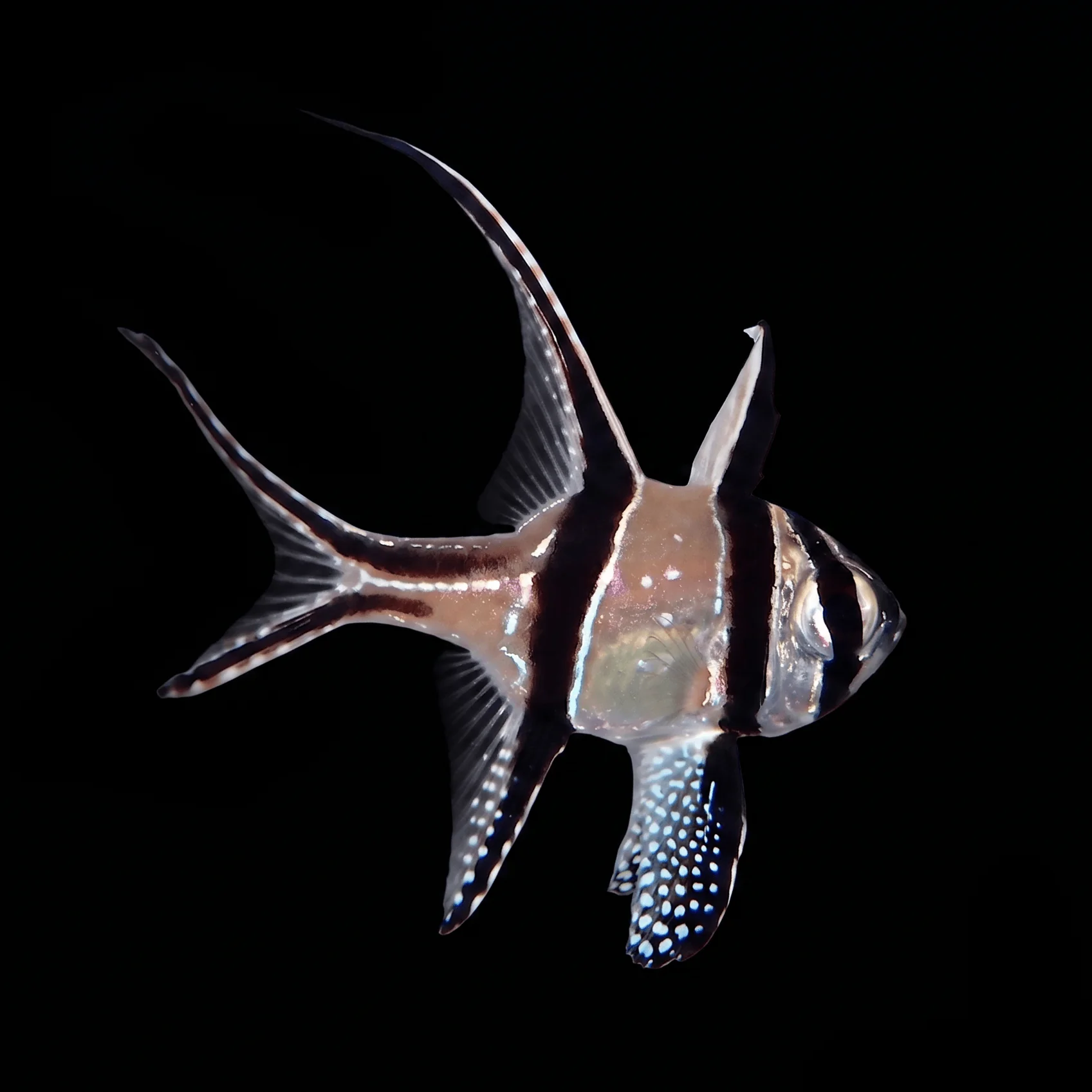
Description
The Captive-Bred Banggai Cardinalfish (Pterapogon kauderni) is a peaceful reef fish known for its bold black striping, elongated finnage, and calm hovering behavior. Native to the Banggai Islands of Indonesia, this species naturally inhabits shallow seagrass beds, sea urchins, and branching corals where it forms small social groups for protection.
Captive-bred Banggai Cardinalfish are highly sought after due to their hardiness, aquarium adaptability, and reduced impact on wild populations. Compared to wild-caught specimens, captive-bred individuals are typically more accustomed to prepared foods and aquarium life, making them an excellent choice for both beginner and experienced reef keepers.
Care Requirements
Care Level: Easy – Hardy and well-suited for established reef aquariums
Minimum Tank Size: 30+ gallons
Aquarium Setup: Peaceful reef or fish-only aquarium with rockwork, shaded areas, and moderate flow
Banggai Cardinalfish prefer calm areas where they can hover comfortably throughout the day. They appreciate rock structures, branching corals, and other sheltered areas that provide a sense of security.
Diet & Nutrition
Captive-Bred Banggai Cardinalfish are carnivores that readily accept a wide variety of prepared aquarium foods.
Diet: Carnivore – Feeds on meaty frozen and prepared foods
Recommended Foods:
- Mysis shrimp
- Brine shrimp
- Finely chopped seafood
- High-quality marine pellets
- Frozen carnivore blends
Captive-bred specimens are usually excellent eaters and adapt quickly to regular feeding schedules. Offering a varied diet helps maintain healthy body weight and finnage.
Lifespan & Growth Rate
Lifespan: 4–6 years
Growth Rate: Slow to Moderate
With stable water quality and proper nutrition, Banggai Cardinalfish remain relatively hardy and can thrive for several years in captivity.
Temperament & Compatibility
Temperament: Peaceful – Calm and slow-moving
Reef Safe? Yes
Banggai Cardinalfish are reef safe and generally coexist well with corals and invertebrates. They are best housed with other peaceful fish that will not outcompete them during feeding.
While peaceful toward most species, adults may become territorial toward other Banggai Cardinalfish unless they are a bonded pair or housed in a sufficiently large aquarium.
Common Challenges & Considerations
Conspecific Aggression:
Keeping multiple adults together in smaller aquariums may lead to territorial disputes or aggression.
Slow Feeding Response:
Their calm nature can cause them to be outcompeted by aggressive tank mates during feeding.
Flow Sensitivity:
Extremely high flow may stress them, as they prefer calmer hovering zones within the aquarium.
Mouthbrooding Behavior:
Males are mouthbrooders and may stop eating temporarily while carrying eggs or fry.
Water Conditions
Temperature: 75–77°F
dKH (Alkalinity): 8–9
pH: 8.1–8.3
Specific Gravity: 1.024–1.026
Stable water parameters and a peaceful environment help support long-term health, breeding behavior, and overall coloration in Banggai Cardinalfish.