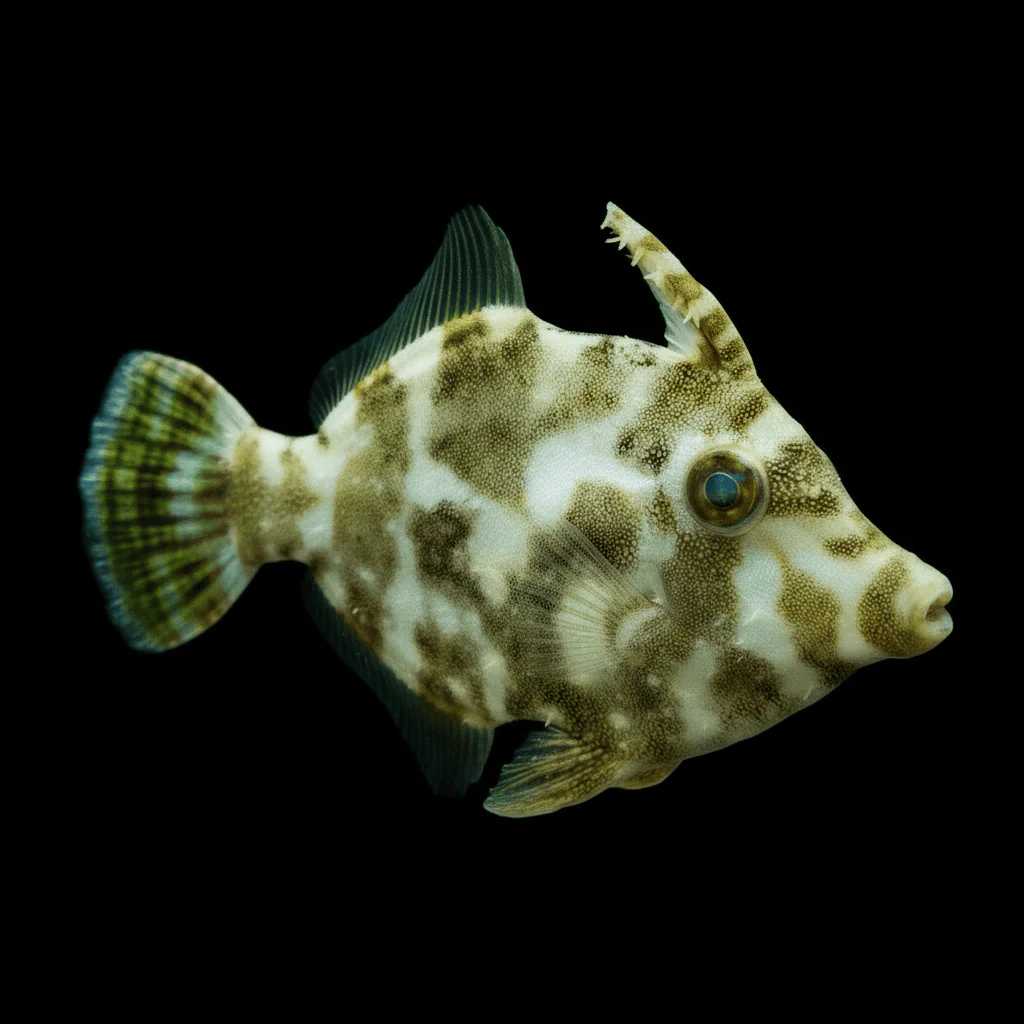
Gray Angelfish - Adult - Pomacanthus arcuatus
The Adult Gray Angelfish (Pomacanthus arcuatus) is a large Atlantic angelfish known for its dark gray body, subtle scale patterning, and bold personality. Native to the Caribbean and Western Atlantic, this species inhabits reef walls, rocky shorelines, and sponge-rich reef environments where it spends much of the day grazing on algae, sponges, and benthic organisms.
Adult Gray Angelfish develop a more subdued but impressive appearance compared to their juvenile coloration, featuring dark gray to charcoal bodies accented with lighter edging along the scales. Their size, activity level, and constant grazing behavior make them a commanding centerpiece fish for large marine aquariums.
Care Requirements
Care Level: Moderate to Advanced – Requires excellent filtration and significant swimming space
Minimum Tank Size: 180+ gallons
Aquarium Setup: Large established aquarium with extensive rockwork, open swimming areas, and strong filtration
Gray Angelfish require a mature aquarium with abundant rock surfaces for grazing along with large open areas to accommodate their active swimming behavior.
Diet & Nutrition
Gray Angelfish are omnivores that naturally consume sponges, algae, tunicates, and various benthic organisms throughout the reef.
Diet: Omnivore – Requires sponge-based foods and varied nutrition
Recommended Foods:
- Sponge-based angelfish preparations
- Spirulina and marine algae
- Mysis shrimp and chopped seafood
- High-quality marine pellets
- Frozen omnivore blends
A varied diet rich in sponge material helps maintain long-term health, coloration, and immune function in larger angelfish species.
Lifespan & Growth Rate
Lifespan: 15–20+ years
Growth Rate: Moderate to Fast
Adult Gray Angelfish can eventually reach well over 12 inches in captivity and require long-term planning for proper housing and filtration capacity.
Temperament & Compatibility
Temperament: Semi-Aggressive – Territorial with maturity
Reef Safe? No (with caution)
Gray Angelfish may become territorial toward other angelfish or similarly shaped fish as they mature. They are generally best housed with larger, semi-aggressive tank mates capable of handling their presence.
This species is not considered reef safe, as it may nip at soft corals, LPS corals, zoanthids, clam mantles, and sponge-based invertebrates.
Common Challenges & Considerations
Large Adult Size:
This species grows into a large, active fish that requires substantial swimming room and strong nutrient export systems.
Coral Nipping:
Coral and clam mantle nipping should be expected in most reef environments.
Waste Production:
Large angelfish produce significant waste and require robust filtration and maintenance routines.
Territorial Behavior:
Aggression may increase considerably as the fish matures, particularly toward other angelfish species.
Water Conditions
Temperature: 75–77°F
dKH (Alkalinity): 8–9
pH: 8.1–8.3
Specific Gravity: 1.024–1.026
Stable water chemistry, strong oxygenation, and efficient filtration are essential for supporting the long-term health and growth of large angelfish species like the Gray Angelfish.
Original: $63.99
-65%$63.99
$22.40
Description
The Adult Gray Angelfish (Pomacanthus arcuatus) is a large Atlantic angelfish known for its dark gray body, subtle scale patterning, and bold personality. Native to the Caribbean and Western Atlantic, this species inhabits reef walls, rocky shorelines, and sponge-rich reef environments where it spends much of the day grazing on algae, sponges, and benthic organisms.
Adult Gray Angelfish develop a more subdued but impressive appearance compared to their juvenile coloration, featuring dark gray to charcoal bodies accented with lighter edging along the scales. Their size, activity level, and constant grazing behavior make them a commanding centerpiece fish for large marine aquariums.
Care Requirements
Care Level: Moderate to Advanced – Requires excellent filtration and significant swimming space
Minimum Tank Size: 180+ gallons
Aquarium Setup: Large established aquarium with extensive rockwork, open swimming areas, and strong filtration
Gray Angelfish require a mature aquarium with abundant rock surfaces for grazing along with large open areas to accommodate their active swimming behavior.
Diet & Nutrition
Gray Angelfish are omnivores that naturally consume sponges, algae, tunicates, and various benthic organisms throughout the reef.
Diet: Omnivore – Requires sponge-based foods and varied nutrition
Recommended Foods:
- Sponge-based angelfish preparations
- Spirulina and marine algae
- Mysis shrimp and chopped seafood
- High-quality marine pellets
- Frozen omnivore blends
A varied diet rich in sponge material helps maintain long-term health, coloration, and immune function in larger angelfish species.
Lifespan & Growth Rate
Lifespan: 15–20+ years
Growth Rate: Moderate to Fast
Adult Gray Angelfish can eventually reach well over 12 inches in captivity and require long-term planning for proper housing and filtration capacity.
Temperament & Compatibility
Temperament: Semi-Aggressive – Territorial with maturity
Reef Safe? No (with caution)
Gray Angelfish may become territorial toward other angelfish or similarly shaped fish as they mature. They are generally best housed with larger, semi-aggressive tank mates capable of handling their presence.
This species is not considered reef safe, as it may nip at soft corals, LPS corals, zoanthids, clam mantles, and sponge-based invertebrates.
Common Challenges & Considerations
Large Adult Size:
This species grows into a large, active fish that requires substantial swimming room and strong nutrient export systems.
Coral Nipping:
Coral and clam mantle nipping should be expected in most reef environments.
Waste Production:
Large angelfish produce significant waste and require robust filtration and maintenance routines.
Territorial Behavior:
Aggression may increase considerably as the fish matures, particularly toward other angelfish species.
Water Conditions
Temperature: 75–77°F
dKH (Alkalinity): 8–9
pH: 8.1–8.3
Specific Gravity: 1.024–1.026
Stable water chemistry, strong oxygenation, and efficient filtration are essential for supporting the long-term health and growth of large angelfish species like the Gray Angelfish.