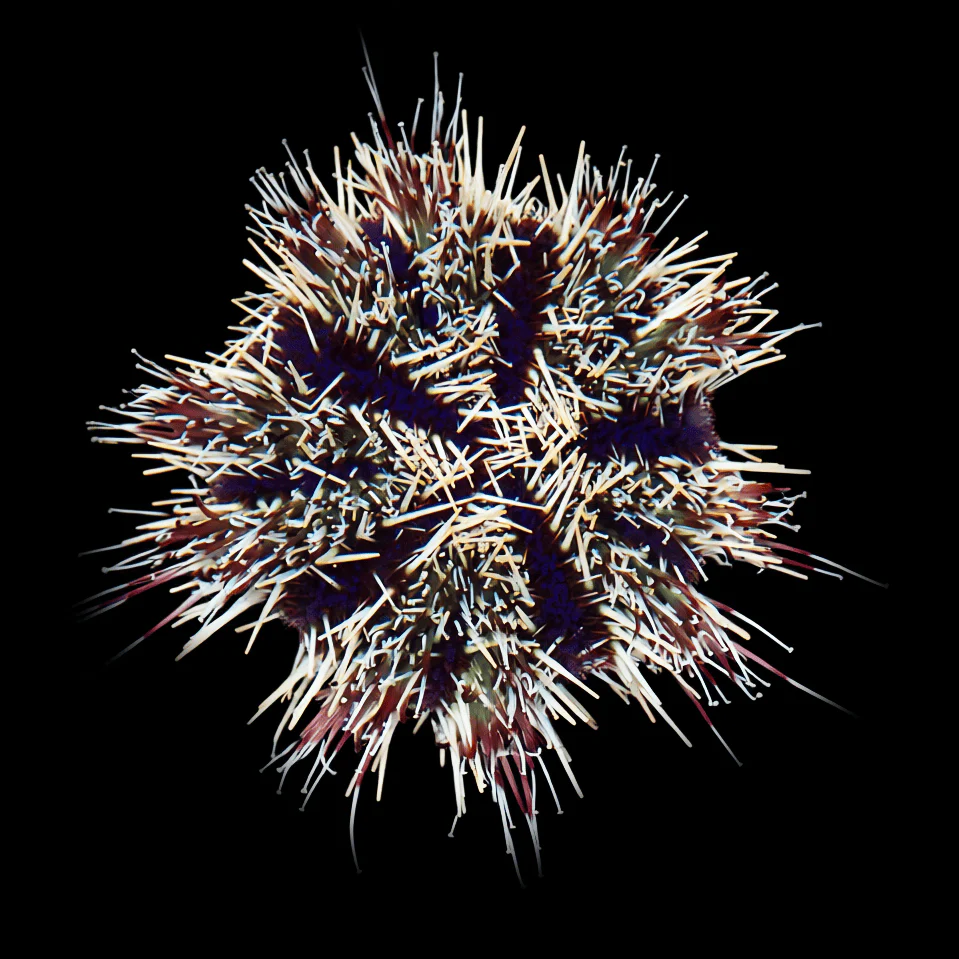
Rock-Boring Urchin
The Rock Boring Urchin (commonly Echinometra species) is a small reef urchin found throughout tropical reef systems where it naturally wedges itself into rock crevices and limestone structures. Over time, these urchins slowly grind and excavate rock surfaces using their specialized mouthparts, creating protective burrows where they spend much of the day sheltered.
In reef aquariums, Rock Boring Urchins are valued for their algae-grazing behavior and ability to clean film algae, microalgae, and some nuisance growth from rockwork. They are primarily nocturnal and will often remain hidden during the day before becoming more active after lights out.
Care Requirements
Care Level: Moderate – Requires stable rockwork and adequate algae availability
Minimum Tank Size: 30+ gallons
Aquarium Setup: Established reef aquarium with mature live rock and moderate water flow
Rock Boring Urchins do best in mature aquariums with abundant natural grazing surfaces. They require stable rockwork, as they may wedge themselves tightly into crevices while grazing or hiding.
Diet & Nutrition
Rock Boring Urchins are herbivorous grazers that spend most of their time feeding on algae growing across rock surfaces.
Diet: Herbivore – Consumes algae and biofilm
Recommended Foods:
- Natural film algae and microalgae
- Nori or dried seaweed sheets
- Spirulina-based herbivore foods
- Algae wafers
In cleaner aquariums with limited algae growth, supplemental feeding is often necessary to prevent starvation.
Lifespan & Growth Rate
Lifespan: 5–10 years
Growth Rate: Slow to Moderate
Given stable conditions and a consistent food source, they can live for many years and remain active algae grazers throughout their lifespan.
Temperament & Compatibility
Temperament: Peaceful – Non-aggressive grazer
Reef Safe? Mostly Yes (with caution)
Rock Boring Urchins are generally reef safe and do not intentionally harm fish or corals. However, they may occasionally dislodge unsecured frags, small rocks, or decorations while moving through the aquarium.
Like many urchins, they may also pick up loose debris, shells, or frags on their spines as camouflage.
Common Challenges & Considerations
Rock Excavation:
Over long periods, they can slowly erode softer rock surfaces while creating hiding areas and grazing pathways.
Loose Frags & Decorations:
Strong movement and climbing behavior may knock over unsecured coral frags or unstable rockwork.
Algae Availability:
Tanks that are too clean may not provide enough natural grazing material, requiring supplemental feeding.
Pump & Overflow Hazards:
Urchins can become injured by exposed pump intakes or overflows. Guards are recommended when possible.
Water Conditions
Temperature: 75–77°F
dKH (Alkalinity): 8–9
pH: 8.1–8.3
Specific Gravity: 1.024–1.026
Stable water chemistry with sufficient calcium and alkalinity helps support healthy spine and skeletal growth over time.
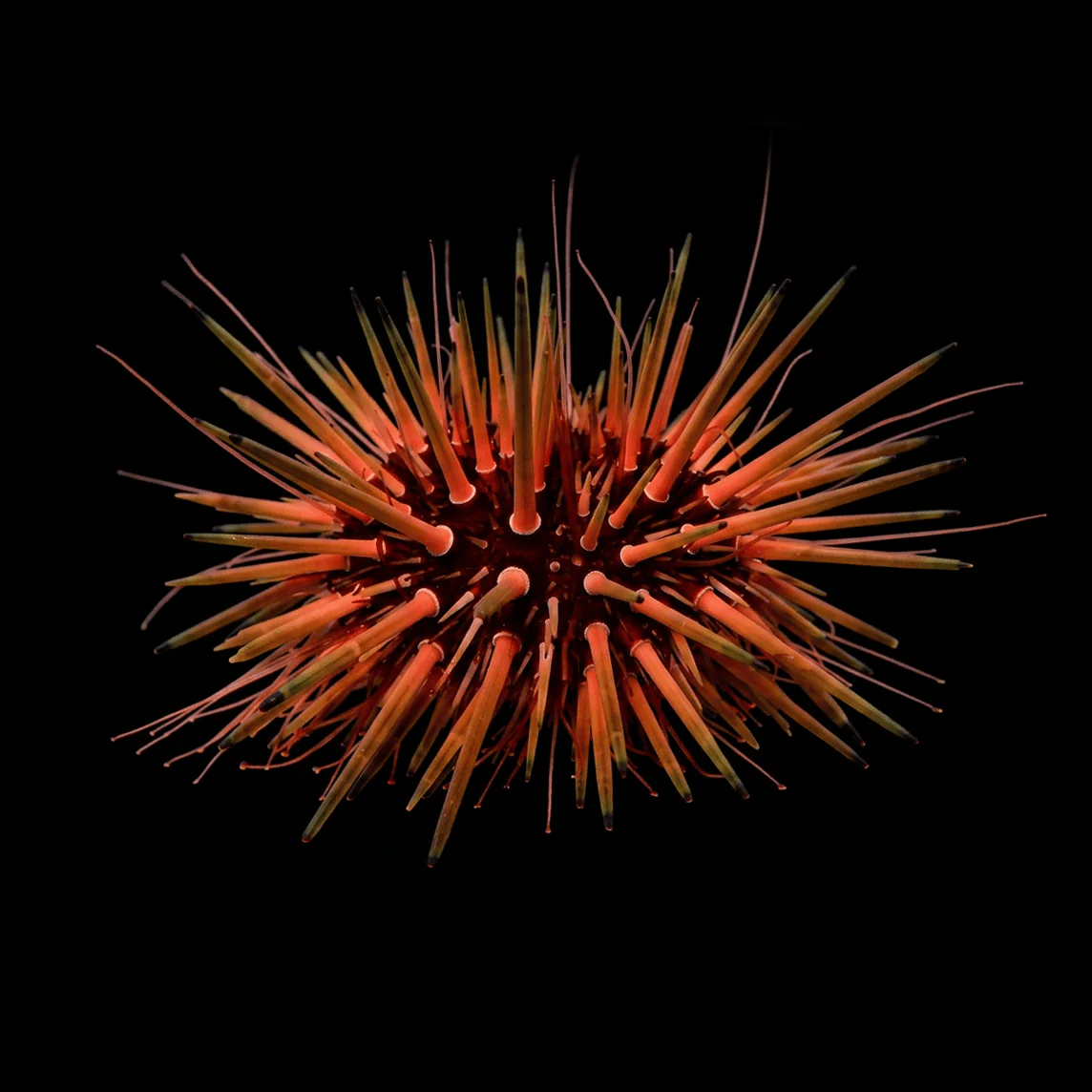
Description
The Rock Boring Urchin (commonly Echinometra species) is a small reef urchin found throughout tropical reef systems where it naturally wedges itself into rock crevices and limestone structures. Over time, these urchins slowly grind and excavate rock surfaces using their specialized mouthparts, creating protective burrows where they spend much of the day sheltered.
In reef aquariums, Rock Boring Urchins are valued for their algae-grazing behavior and ability to clean film algae, microalgae, and some nuisance growth from rockwork. They are primarily nocturnal and will often remain hidden during the day before becoming more active after lights out.
Care Requirements
Care Level: Moderate – Requires stable rockwork and adequate algae availability
Minimum Tank Size: 30+ gallons
Aquarium Setup: Established reef aquarium with mature live rock and moderate water flow
Rock Boring Urchins do best in mature aquariums with abundant natural grazing surfaces. They require stable rockwork, as they may wedge themselves tightly into crevices while grazing or hiding.
Diet & Nutrition
Rock Boring Urchins are herbivorous grazers that spend most of their time feeding on algae growing across rock surfaces.
Diet: Herbivore – Consumes algae and biofilm
Recommended Foods:
- Natural film algae and microalgae
- Nori or dried seaweed sheets
- Spirulina-based herbivore foods
- Algae wafers
In cleaner aquariums with limited algae growth, supplemental feeding is often necessary to prevent starvation.
Lifespan & Growth Rate
Lifespan: 5–10 years
Growth Rate: Slow to Moderate
Given stable conditions and a consistent food source, they can live for many years and remain active algae grazers throughout their lifespan.
Temperament & Compatibility
Temperament: Peaceful – Non-aggressive grazer
Reef Safe? Mostly Yes (with caution)
Rock Boring Urchins are generally reef safe and do not intentionally harm fish or corals. However, they may occasionally dislodge unsecured frags, small rocks, or decorations while moving through the aquarium.
Like many urchins, they may also pick up loose debris, shells, or frags on their spines as camouflage.
Common Challenges & Considerations
Rock Excavation:
Over long periods, they can slowly erode softer rock surfaces while creating hiding areas and grazing pathways.
Loose Frags & Decorations:
Strong movement and climbing behavior may knock over unsecured coral frags or unstable rockwork.
Algae Availability:
Tanks that are too clean may not provide enough natural grazing material, requiring supplemental feeding.
Pump & Overflow Hazards:
Urchins can become injured by exposed pump intakes or overflows. Guards are recommended when possible.
Water Conditions
Temperature: 75–77°F
dKH (Alkalinity): 8–9
pH: 8.1–8.3
Specific Gravity: 1.024–1.026
Stable water chemistry with sufficient calcium and alkalinity helps support healthy spine and skeletal growth over time.